Will we have less space in the University City?
It’s true that Aarhus BSS will reduce its floor area by about 10% when the faculty moves to Universitetsbyen, due to a government-imposed cap on rent. But that doesn’t mean you’ll be crammed into tiny classrooms or lose your favorite study spot.
Staff will have fewer square meters
The reduction in space primarily affects office and administrative areas for staff – not the student environments. The goal has been to optimize office space, including reducing the average size of offices, so that student areas are impacted as little as possible.
Optimizing the built-up area also makes the relocation more sustainable. In other words, square meters have been saved by designing more efficient staff offices (e.g. slightly smaller individual offices or more shared offices) and by consolidating service functions. This means that areas dedicated to students – such as lecture halls, classrooms, libraries, and group rooms – are affected as little as possible.
Better design and higher quality
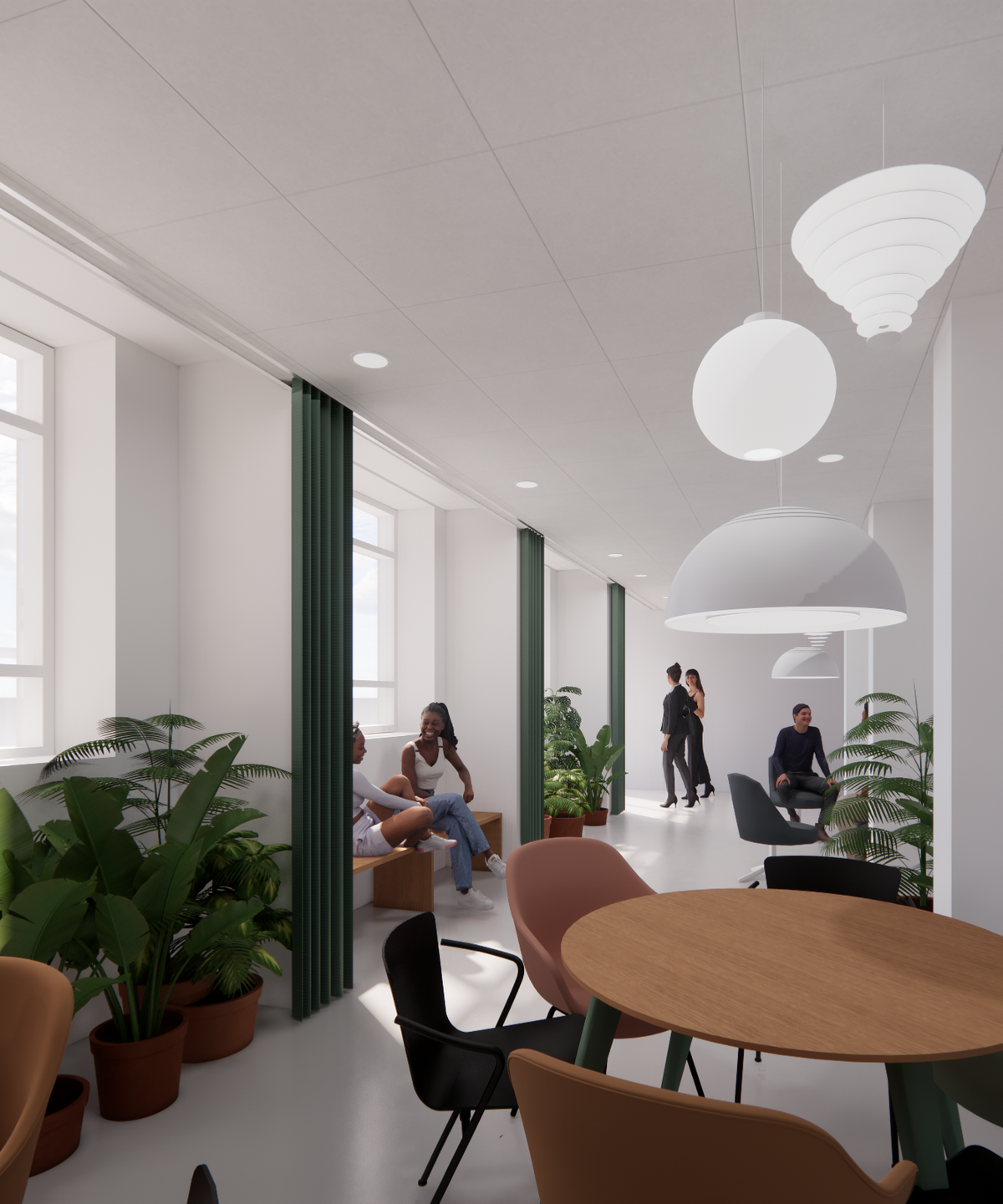
The aim has been to make the campus more streamlined without compromising on quality. The student areas are better designed, meaning fewer dead hallways and more usable nooks for focused study.
Think of it this way: If a lecturer’s office becomes slightly smaller, but the classroom next door gains better technology and lighting, it’s a trade-off that benefits students. It’s not necessarily about having more space, but about using the space more intelligently. So you won’t get fewer study spaces – in fact, you’ll likely get more, just distributed differently (library, open zones, departmental lounges).
The new campus is based on the principle of offering “many study spaces” to ensure a flexible study environment. The entire campus becomes yours. There will be shared lecture halls, canteens, and so on. If one building is full, you just move to the next. It’s a more integrated environment.
In short: The available space will be used efficiently, and your needs for classrooms, study areas, and social spaces have all been taken into account.