Teams as platform for collaboration
Microsoft Teams is part of the Office 365 package, and it allows members of a team to chat, conduct conversations, hold virtual meetings and share files with each other.
Teams also gives the group a shared and easy-to-search memory. For example, all chat communication is saved in Teams, so any new members of a team can easily read through the chat and find out what was going on in the team before they joined.
Teams is particularly suitable for informal communication between individuals, and it has a number of functions that resemble those we know from social media.
Getting started with Teams
Getting started with Teams
To get the best out of Teams, we recommend that you download Teams to your computer.
It is also possible to use Teams in the browser version - via login to m365.cloud.microsoft, but you will only get the full benefit of Teams if you download the app to your computer.
If you are invited to participate in a team, you will receive an email. Follow the instructions in the email, and you will be able to access the team by logging on with your AU ID and password.
How to order a Team
How to order a Team
If you need to create a new Team, you can do it yourself. Please use this guide:
To create the team, you must fill in this information:
- Name
- Affiliations (BSS, ARTS, HE, NAT, TECH, NAT-TECH)
- Secondary owner (in the format au12345)
- Information about sensitive/personal data
- Description of the Team's purpose (max. 100 characters)
You will receive more information before the start of the semester on how to create teams in the future.

Guidelines for students on Teams
Guidelines for students on Teams
Teams is a platform to help you collaborate and build communities. You can use Teams to:
- Collaborate with your fellow students, lecturers and external partners in academic and professional contexts.
- Create teams for the communities you are part of at AU, both those linked to your degree programme courses and those that bring together students across the university, such as student associations.
- Using Teams in your degree programme courses:
- It is your teachers who determine how they will use Teams in their courses and their daily communication about individual courses.
- If you use Teams to collaborate with other students, it’s important to agree on how you will use the platform and to make clear rules for your team. You can find good advice and guidance on how to collaborate effectively on Studypedia.
- Using Teams in general contexts:
- Write respectfully to and about each other. At AU, student codes of conduct require you to behave with consideration and decency, both in person on campus and when using AU’s digital platforms and IT systems.
- Please note that Teams may not be used for mass messaging.
- Always keep your communication relevant to the team’s purpose. Ask yourself what you would like to receive as a member of the team.
- Teams is not the primary communication channel between you and AU:
- Teams is only one of the many digital platforms available at AU, and it is not the primary channel to communicate information that is relevant to your studies and courses.
- For this reason, as a student, you are not expected to monitor various Teams channels for important information from the university or your teachers. You are, however, expected to keep an eye on your AU email (Exchange) for information about your studies and on Brightspace for information about your courses and teaching.
- You can get an overview of the new information you’ve received on different platforms by visiting mystudies.au.dk. For a full overview of what the different AU platforms are used for, go to https://studerende.au.dk/overblik.
How to add new members to a Team
How to add new members to a Team
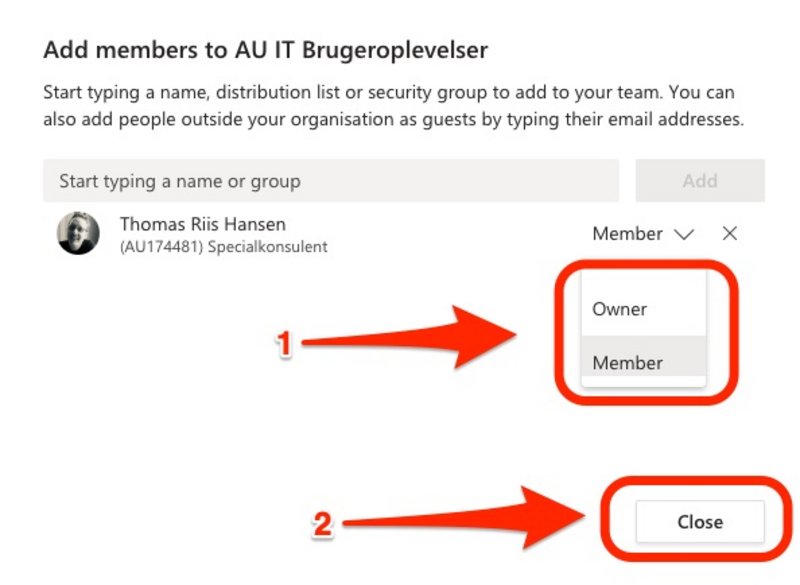
Please note that you must be Team owner in order to be able to add new Team members. If you are not Team owner, you can ask the Team owner to change your status to Team owner. You can also ask the Team owner to add a new member to the Team.
When you open Teams, you can see which Teams you are a member/owner of.
- Click the three dots next to the Team you want to add members to.
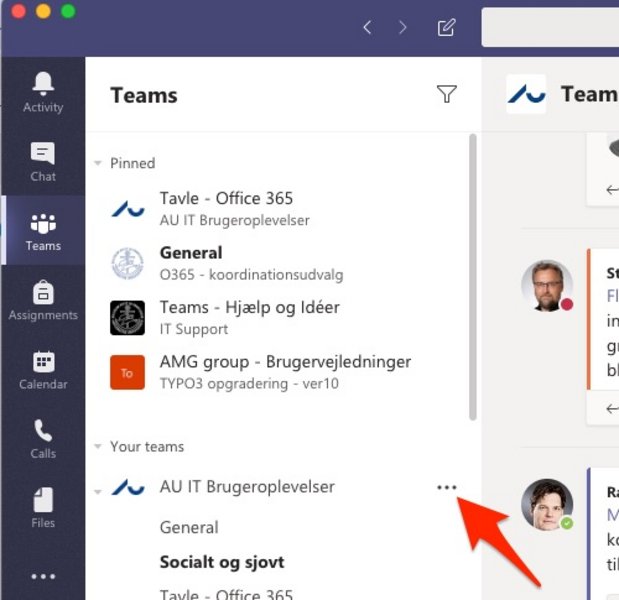
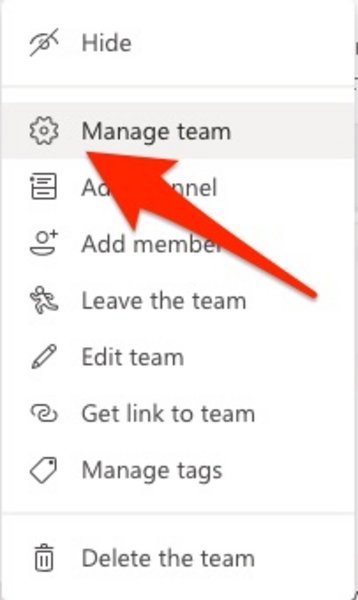
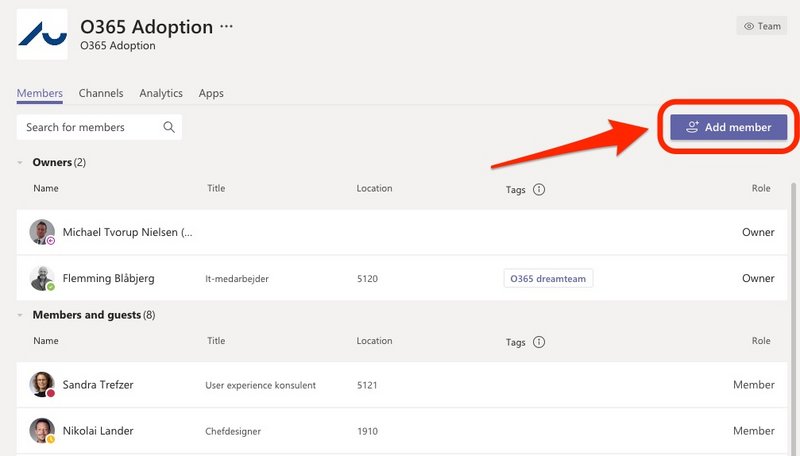
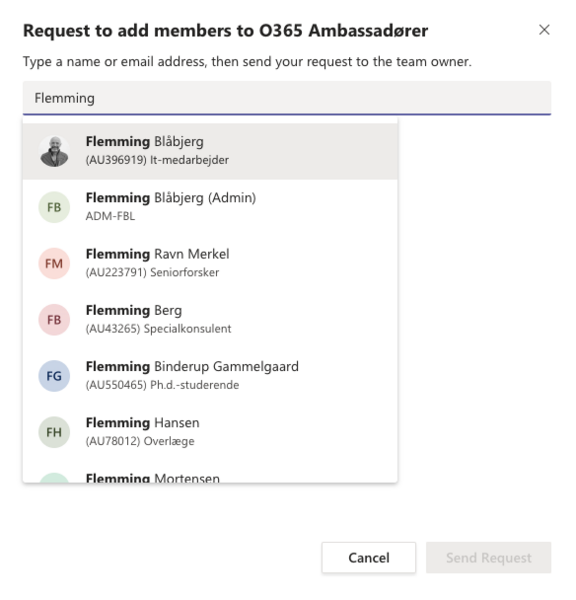
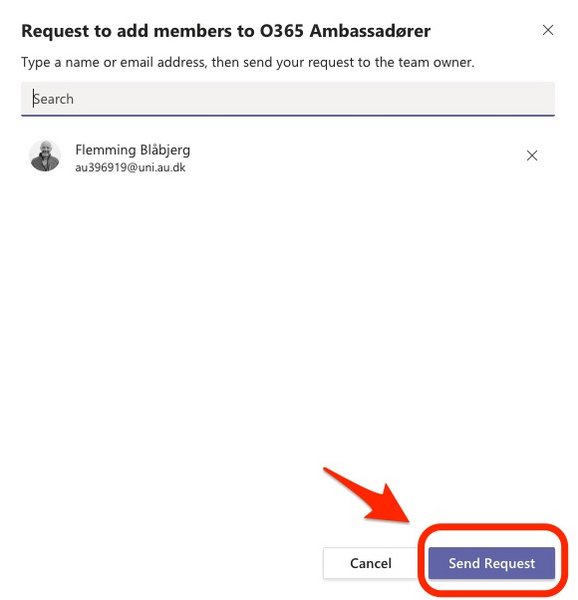
It will be possible for you to ask the Team owner to add a new member to the Team. Write the name or the email address of the person who should be added to the Team and select the person on the list.

How to add external members to a Team
How to add external members to a Team
The procedure is very similar to the way you create internal users. In the following, we assume that you are the owner of the team. If you're not the owner, the procedure is almost the same — with the small difference that you can't create the user yourself, but can ask an owner to approve the creation.
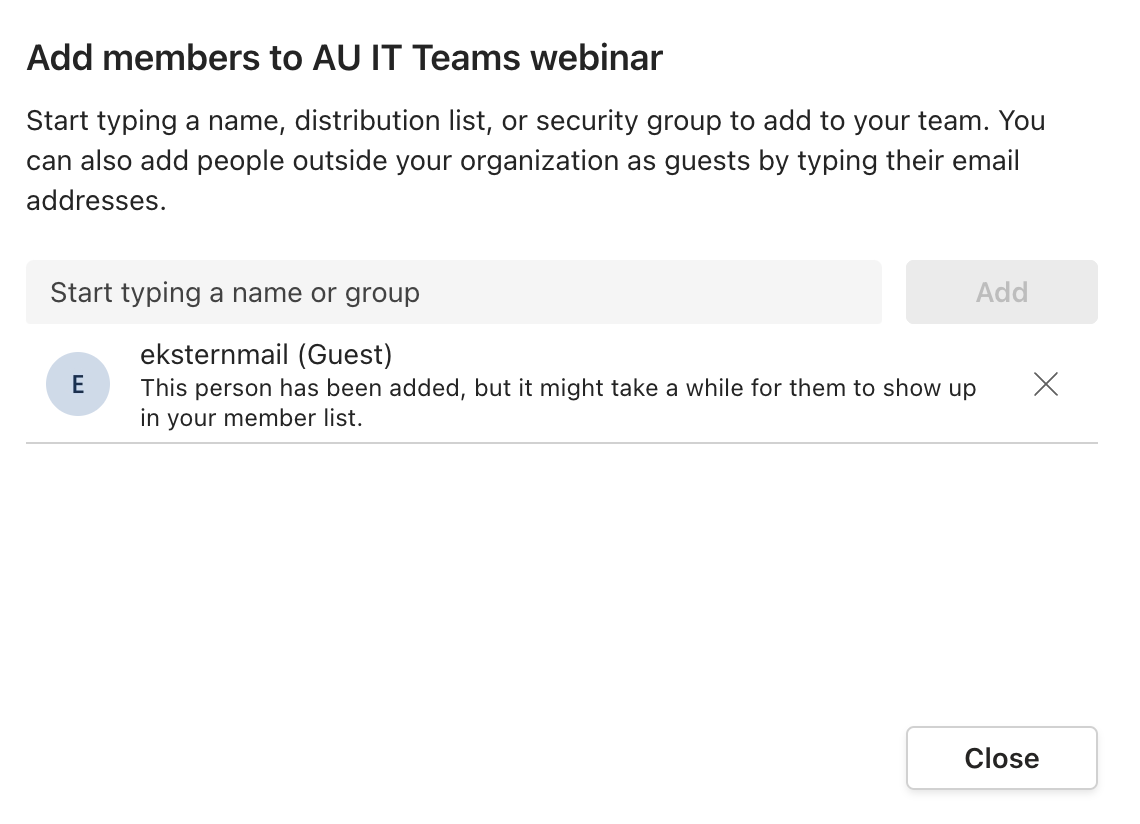
- Click the three dots next to the Team you want to add an external user to
- Click on "add user"

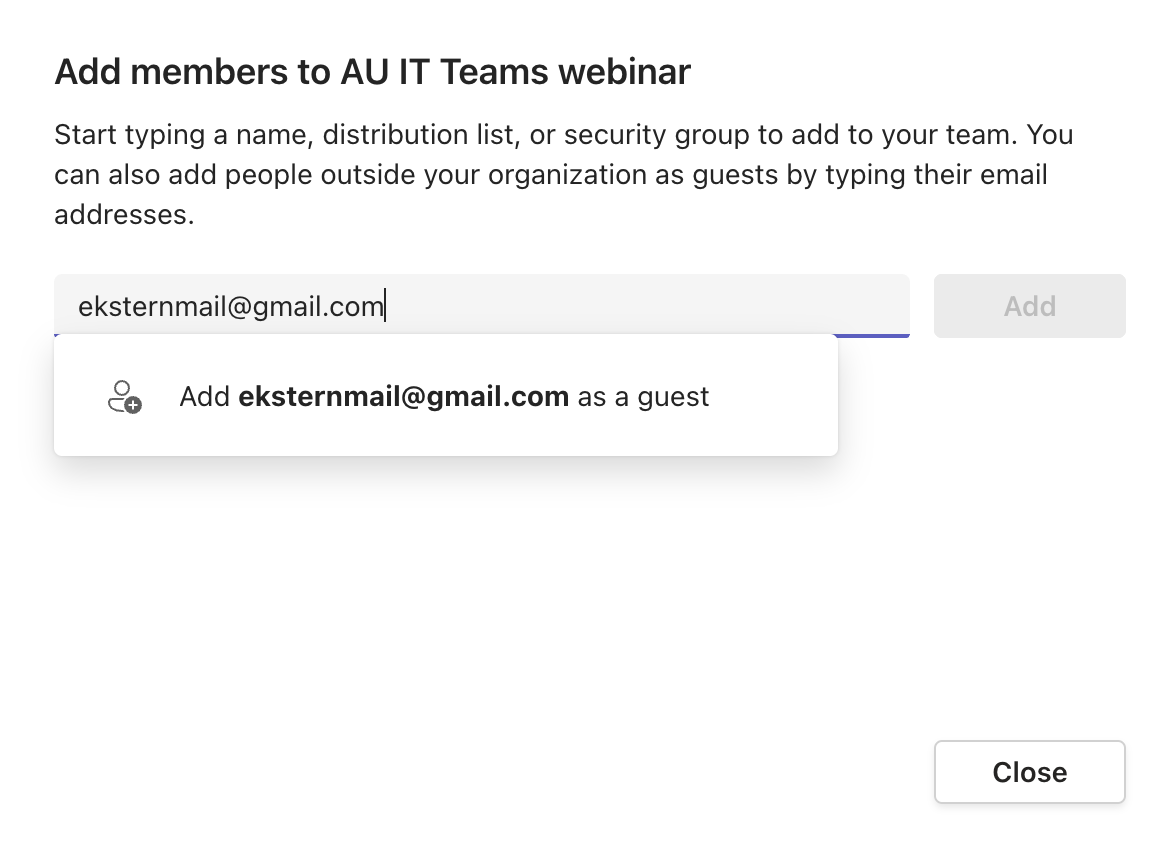
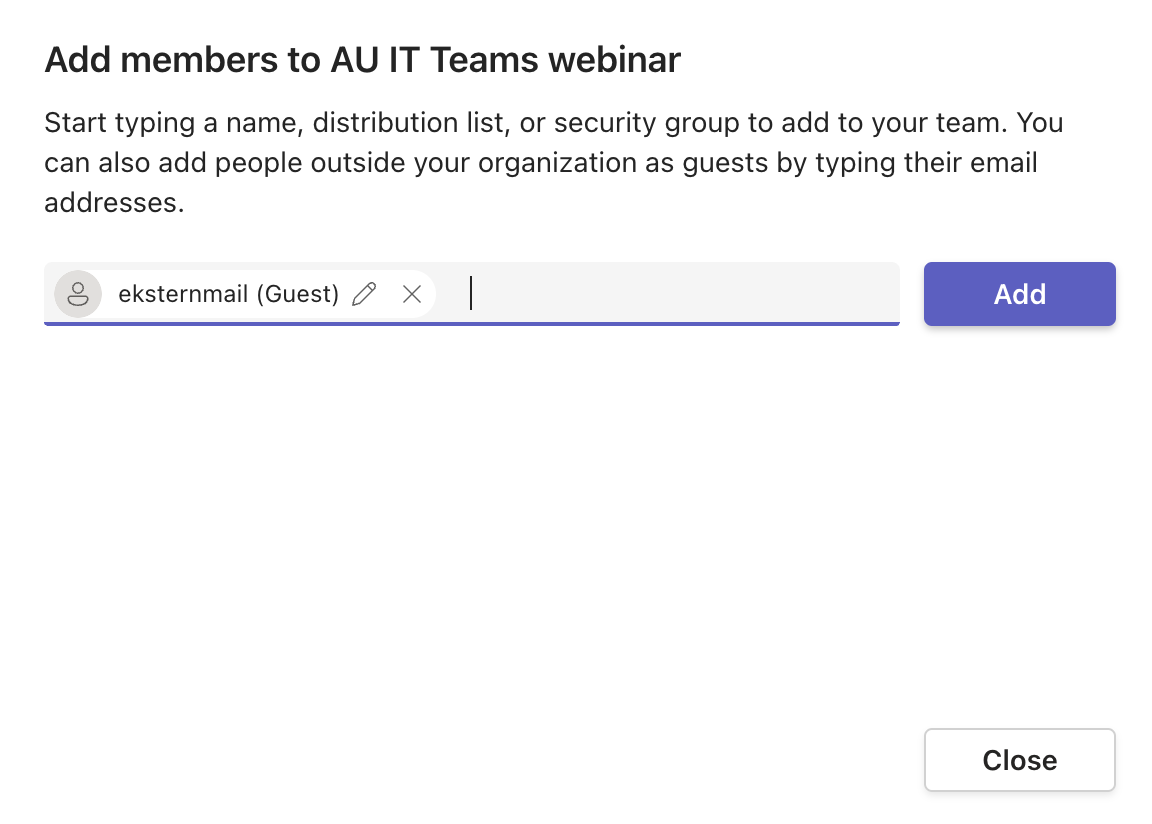
Enter the email of the external user and press ”Add [email protected]” as guest
Security in Teams
AU has entered into a data processing agreement with Microsoft so that all employees can safely use the tools in Office 365. However, we must be particularly attentive to classifying the data we are working with correctly, as special rules apply for processing, storing and sharing ordinary and sensitive personal data (GDPR) as well as confidential data.